
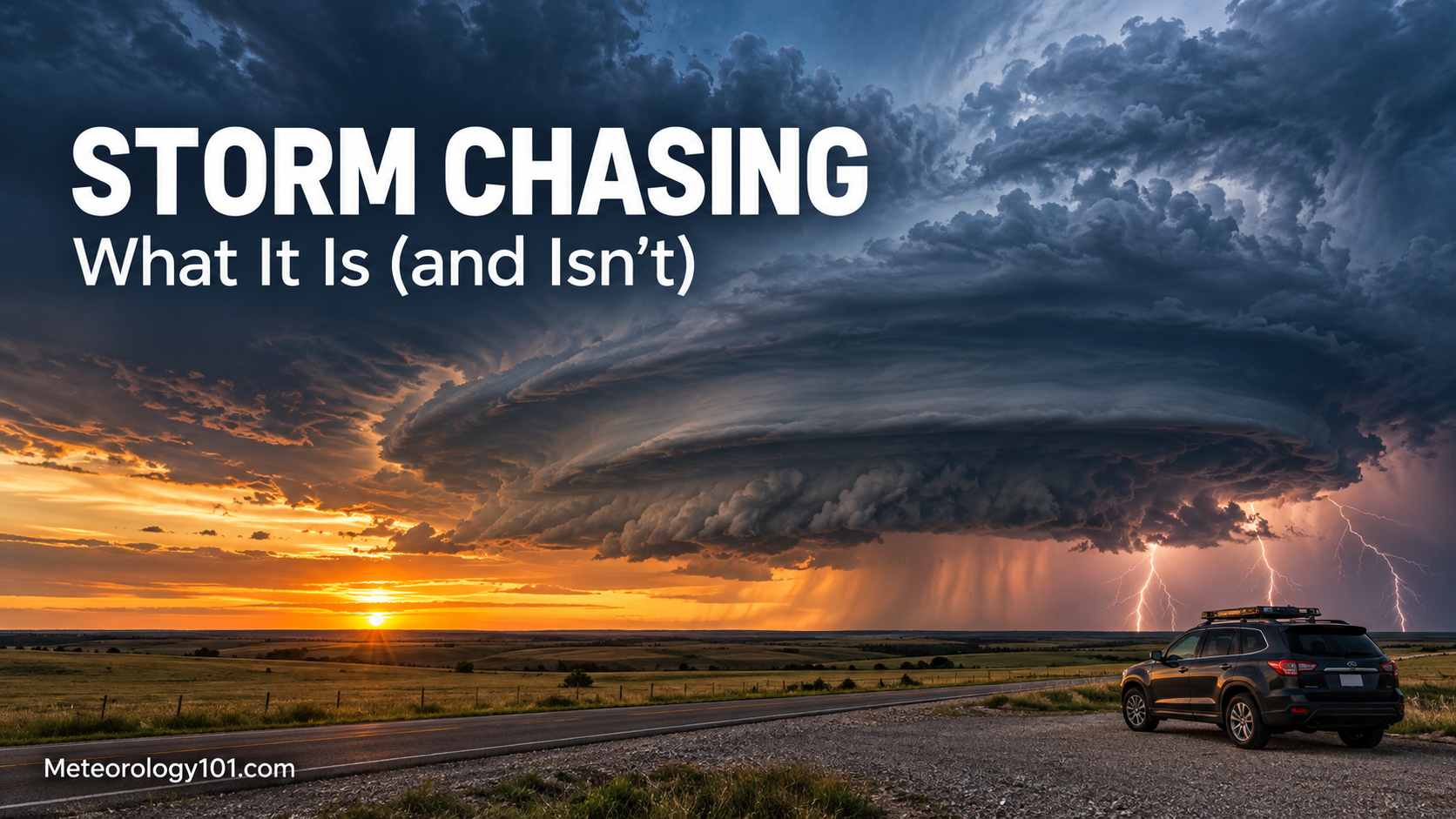
A towering thunderstorm rises over the plains. Lightning flashes across the Arizona desert. Beneath a dark cloud base, a tornado briefly touches down. All three scenes can draw storm chasers, but only one involves a tornado.
Storm chasing is the art and science of deliberately seeking out and observing thunderstorms. People do it for photography, scientific research, personal fascination, or the challenge of understanding the atmosphere. Tornadoes attract the headlines, but they are only part of the story.
The shape of a storm, its lightning, hail, colors, and movement can be just as compelling. A photographer traveling across Arizona to capture lightning is a storm chaser, even if a tornado never enters the forecast. For some people, a beautifully structured thunderstorm against the evening sky is the highlight of an entire season.
The science begins before the storm develops. Chasers study forecasts and observations to decide where storms may form and how they might evolve. The art comes from interpreting a changing sky and making decisions when reality does not follow the forecast. Plenty of chasing involves waiting, driving, reconsidering a target, or heading home without seeing what was expected.
Although the terms are often used interchangeably, storm chasers, storm spotters, and research chasers have different primary roles.
Most recreational storm chasers are enthusiasts who pay their own expenses. They may be engineers, cooks, mechanics, programmers, or people from almost any other profession. Independent chasers choose their own destinations and decide which storms to follow. That freedom also means taking responsibility for interpreting weather information and making their own decisions.
Storm spotters generally focus on conditions in or near their communities. Many are trained volunteers in the National Weather Service’s SKYWARN program; others work in public safety. Their reports help forecasters connect radar information with what is actually happening on the ground, including hail, damaging winds, flooding, and tornadoes. Some participate in amateur radio networks with a net controller who coordinates reports. Others use reporting methods provided by their local NWS office. A radio license is not required simply to be a spotter. (NWS spotter information, NWS reporting resources)
Research chasers work toward specific scientific goals. Scientists, students, and technical staff participate in organized field projects, with team leaders coordinating observations and deployments. Their purpose may be to measure storm conditions or collect data that can improve understanding and forecasting. Fieldwork is one part of a larger research job that also involves preparation, analysis, and communicating results. (NOAA National Severe Storms Laboratory)
These roles can overlap. A recreational chaser may also be a trained spotter who submits useful reports. A scientist may photograph storms for enjoyment. What matters is understanding the purpose and responsibilities of each role.
One common misconception is that every chaser holds a special qualification. In the United States, recreational chasing generally does not require a meteorology degree or a universal storm-chasing certification. A strong meteorology background can help considerably, but calling yourself a chaser does not establish expertise. Chasers must follow applicable traffic, property, access, and other local rules. The label provides no automatic authority to enter restricted areas or disregard road closures.
Another misconception is that storm chasing is a straightforward career. For most people, it is a hobby they fund through other work. Some earn money through tours, photography, video, or media coverage. Researchers may observe storms as part of paid scientific work, but their employment involves much more than chasing. NSSL specifically explains that it has no standalone “Storm Chaser” job description. (NSSL careers)
The expenses are also easy to underestimate. Fuel, food, lodging, vehicle maintenance, and equipment can add up quickly during a trip lasting several days. Those bills still arrive when storms fail to develop or the forecast target turns out to be wrong. Seeing dramatic footage online does not reveal the miles, waiting, and costs behind it.
There is also more to the danger than tornadoes. Lightning, hail, flooding, poor visibility, and driving conditions can make storm observation hazardous. NOAA discourages the public from chasing severe weather. For readers interested in learning about storms and helping their communities, local SKYWARN training offers education in storm identification, reporting, and safety; it is not a qualification to pursue tornadoes. (NOAA on storm chasing, NWS SKYWARN)
The appeal of storm chasing is easy to understand: the atmosphere can produce extraordinary sights. Understanding the activity means recognizing the forecasting, patience, expense, and responsibility behind those images. A tornado may make the news, but a storm does not need one to be remarkable.